
Burnt sugar cream

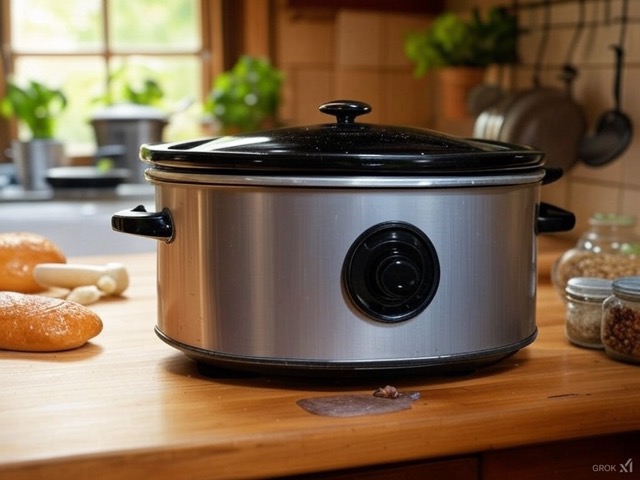
I have been postponing trying the caramel custard in the multicooker, especially for the part with the caramel directly in the pot. I was afraid it would stick or ruin the non-stick layer. However, after consulting with someone who frequently cooks with the appliance, I gathered my courage and tried it. I caramelized the sugar in the multicooker's pot, which went smoothly, but I kept a close eye on it. The rest of the steps were simple and without surprises. Quick Info Total time: about 1 hour and 30 minutes (including partial cooling) Preparation time: 10-15 minutes Cooking/baking time: 1 hour (depending on the appliance) Servings: 10-12 Difficulty: easy Recipe type: dessert in multicooker Ingredients 1 liter of fresh milk (I used goat milk) 10 large eggs sugar to taste (I use about a tablespoon of sugar for each egg, but you can use less) 2-3 tablespoons of sugar for caramel optional: vanilla or rum essence Preparation method 1. Caramelizing the sugar Put 2-3 tablespoons of sugar directly in the multicooker's pot. Start the FRY function and let the sugar caramelize. It took about 10 minutes for me. Stay close and supervise so it doesn't burn too much. When the sugar is completely melted and golden, stop the function and gently rotate the pot to evenly cover the bottom. Let it cool while you prepare the rest. 2. Mixing the composition Separately, put the eggs and sugar (the rest, not the caramelized one) in a large bowl. Mix well until the sugar is completely dissolved. It's important not to rush this step, otherwise the custard will remain grainy. Pour the milk over the beaten eggs and mix until the composition becomes homogeneous. If you want, you can add vanilla or rum essence. 3. Pouring and baking Pour the mixture over the caramelized sugar directly in the pot. Close the multicooker's lid and set it to the baking program (or the cake program, if it has one). It worked for me at 180 degrees, but for a finer texture, I recommend lowering the temperature to 150 degrees or even lower, if you have patience. Bake until the custard is well set but still slightly wobbly in the center. The time may vary, but it generally fits within an hour. 4. Cooling and serving Remove the pot and let the custard cool to room temperature, then refrigerate for a few hours. It needs to be completely cold before turning it onto a plate or portioning. If you want, you can serve it with whipped cream. Why I make the recipe often It's quick to prepare, uses readily available ingredients, and doesn't dirty many dishes. I like that the texture remains creamy, even after cooling. It's a classic dessert that I can make anytime I have milk and eggs. Tips and variations Tips Do not use too much caramelized sugar, otherwise the custard will become very liquid and syrupy at the base. For a more compact and smooth custard, keep the amount small during caramelization. Avoid mixing the milk with the eggs too vigorously, so that foam does not form on the surface. You can strain the mixture through a sieve for a finer texture. Substitutions Goat milk can be replaced with cow's milk or a combination of plant milk and cow's milk if you don't have it on hand. You can vary the essences – vanilla or rum work just as well. Variations For flavor, you can add a little lemon zest to the mixture, but it is not part of the basic recipe. You can decrease or increase the amount of sugar, as you prefer. Serving ideas Caramel custard can be served plain, cold, or with whipped cream on top if you want an extra touch of flavor and texture. It also goes well with a little fresh mint or fresh fruits, but most often I leave it plain. Frequently asked questions 1. Can I caramelize sugar in the multicooker without damaging the pot? Yes, if you use the FRY function and supervise closely, the sugar does not affect the pot's coating. 2. What happens if I put too much sugar for caramelization? The custard will be more liquid and syrupy at the base, not as firm and smooth. A small amount of sugar is sufficient for caramel. 3. Can I reduce the sugar in the composition? Yes, it is not mandatory to follow the rule of one tablespoon of sugar for each egg. Add to taste. 4. What temperature should I choose for baking? 180 degrees gives good results, but for a finer custard, you can try at 150 degrees or even lower, with a slower baking process. Nutritional values Approximately, one serving (out of 10) has about 190-220 kcal, depending on the amount of sugar used and the type of milk. Carbohydrates 20-25 g, protein 7-8 g, fats 7-9 g per serving. These are approximate values, as goat milk has variable fat content. Storage and reheating It can be stored in the refrigerator, covered, for up to 3 days. I do not recommend reheating; the custard is served only cold. If there are leftovers, it keeps well in the refrigerator and does not significantly change texture.
Tags
Categories

Appetizers

Beverages

Celebrity chefs
Chef in the city

Children

Coffee

Conserve

Cook and smile

Culinary Games
Culinary School

Dessert

Diverse

Doughs and pastries
Drinks

Fish
Healthy Delights

International
Jakob Hausmann
Jam
Jamie Oliver

Meat
Miscellaneous
Over

Pasta/Pizza
Pickles
Plague
Salad

Sandwiches

Sauces
Savory
Season
Sezon
Slow cooking

Soups
Star Recipe

Syrup
Translated
Various

Vegan