
Salad with vegetables and salty cheese

Vegetable Salad with Feta Cheese When you're looking for something simple and no-cook, this salad can be quickly prepared with a few fresh vegetables and some feta cheese. Chop the onion, bell pepper, cucumber, and endives, then mix them with cubed cheese. Season only with salt and vinegar to taste. It's a great side dish for a main course, but can also be a light option for those on a diet. In this case, the feta can be replaced with a lower-calorie cheese. Quick Info Total time: not specified; the salad is prepared without cooking, in a few minutes Preparation time: not specified Cooking or baking time: not necessary Servings: not specified; the quantity is for one salad bowl Difficulty: easy Recipe type: vegetable salad with cheese, suitable as a side dish or light meal Ingredients 2 green onions 50-70 g feta cheese 1 green bell pepper 1 piece of endive 1 large cucumber Salt, to taste Vinegar, to taste Preparation method 1. Rinse all the vegetables well and let them drain. For a pleasant salad, the vegetables should be cleaned and washed before cutting. 2. Slice the green onions into rings. If the stalks are thicker, the rings can be cut a bit thinner to mix easily with the other ingredients. 3. Remove the seeds from the bell pepper and chop it finely. 4. Slice the cucumber. There's no need to peel it. 5. Separate the endive leaf by leaf and cut the leaves into larger pieces. This way, the leaves will maintain their texture better in the salad. 6. Cut the feta into cubes. If the cheese is very salty, keep this in mind before adding salt to the vegetables. 7. Place all the ingredients in a bowl. Season with salt, add vinegar to taste, and mix gently until the ingredients are evenly distributed. The salad can be served immediately after preparation. The vinegar and salt draw water from the cucumber and other vegetables, so it's better to add them close to serving time if you want to keep the salad as crisp as possible. Why I make this recipe often It's a simple, no-cook salad with no waiting time. The vegetables are chopped directly in the bowl, and the feta provides enough flavor that not many seasonings are needed. I especially make it when I need a quick side dish or want something light but not just plain vegetables. The amount of feta is moderate, and for a diet version, a lower-calorie cheese can be used, as mentioned in the base recipe. However, the choice of substitute is up to each individual, as no specific type of cheese is indicated. Tips Rinse the endive well, including between the leaves, as impurities can remain there. After washing, let the vegetables drain before cutting them to prevent the salad from becoming watery. The salty feta significantly influences the final taste. Add salt gradually and taste the salad before adding more. If the cheese is already very salty, it may be enough for seasoning along with the vinegar. The cucumber should be sliced, not grated. This way, it retains its shape better and provides a more pleasant texture to the salad. Cut the endives into larger pieces than the bell pepper and onion. The leaves are tender, and if they are chopped too small, they can wilt faster after adding salt and vinegar. Substitutions For the diet version, the salty feta can be replaced with a lower-calorie cheese. The recipe does not specify a particular type, so any available option that fits personal preferences and dietary plans can be used. If you don't have green onions, the source of the recipe does not provide an exact alternative. To keep the recipe as close to the original as possible, it's preferable to use the mentioned ingredients: green onion, green bell pepper, cucumber, endive, and feta. Variations The salad can be made more or less salty, depending on the feta used. The amount of vinegar can be adjusted to taste without needing a fixed measurement. For a milder salad, use less onion or slice the onion into very thin rings. If you prefer a stronger flavor, maintain the ratio between vegetables and feta and season gradually until the salad is to your liking. Another simple variation is to cut the vegetables into different sizes, keeping the endives in larger pieces and the bell pepper smaller. This doesn’t change the ingredients but provides a more varied texture in every bite. Serving ideas The salad can be served as is, as a snack, or a light meal. It's also suitable alongside a main dish, especially when you want a cold side of fresh vegetables. For a simple platter, place the salad in a separate bowl and add the feta at the end, so the cubes remain visible. The recipe is served after seasoning, with no additional cooking steps. Frequently asked questions Can the salad be made without feta? Yes. The feta can be replaced with a lower-calorie cheese for a diet-friendly version or omitted altogether. If omitted, the taste will be less salty, so salt should be added carefully and adjusted to taste. How much vinegar should be added to the salad? The recipe does not specify an exact amount. The vinegar is added to taste, gradually, and then the salad is mixed and tasted. It’s easier to add more than to correct a salad that has too much vinegar. Does the cucumber need to be peeled? This is not mentioned in the recipe. The cucumber is washed and sliced. The skin can be left on. Should the endive be cut whole or leaf by leaf? The endive should be separated leaf by leaf, then the leaves cut into larger pieces. This is the method indicated in the original recipe and helps maintain a more consistent texture. Can the salad be made with more feta? Yes, but the feta is salty and can quickly change the taste of the salad. The recipe uses 50-70 g, so it's better to start from this amount and adjust only if necessary. Nutritional values The values below are estimates for the entire quantity of salad and can vary depending on the size of the vegetables and the type of feta used. Since the recipe does not specify the number of servings and does not provide weights for the vegetables, an exact value cannot be calculated. Calories: approximately 280-360 kcal for the entire salad Protein: approximately 11-15 g Carbohydrates: approximately 35-45 g Fats: approximately 13-20 g The majority of fats and proteins come from the feta. The vegetables contribute water, fiber, and carbohydrates, and the final value depends on how large the onions, cucumber, bell pepper, and endive are. If the feta is replaced with a lower-calorie cheese, the energy intake may decrease. Storage and reheating The salad should not be reheated. It is best enjoyed fresh, immediately after adding the salt and vinegar, as the vegetables can release water and lose their firmness. If a portion remains, store it in the refrigerator in a covered container and consume it as soon as possible. For better texture, you can keep the vegetables separate from the salt, vinegar, and feta if the salad has not yet been mixed. The recipe does not specify an exact storage time, so it is recommended to prepare only the quantity that will be consumed.
Tags
Categories

Appetizers

Beverages

Celebrity chefs
Chef in the city

Children

Coffee
Conserve

Cook and smile
Culinary Games
Culinary School

Dessert

Diverse

Doughs and pastries
Drinks

Fish
Healthy Delights

International
Jakob Hausmann
Jam
Jamie Oliver
Meat
Miscellaneous
Over
Pasta/Pizza
Pickles
Plague
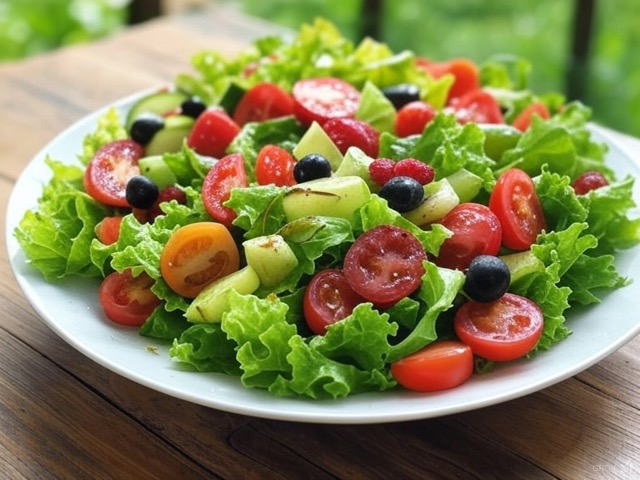
Salad

Sandwiches
Sauces
Savory
Season
Sezon
Slow cooking
Soups
Star Recipe
Syrup
Translated
Various
Vegan


