
Homemade Pizza

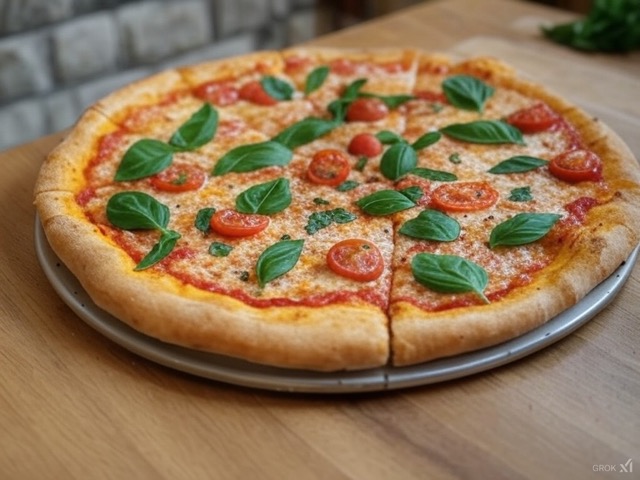
The dough for this homemade pizza is made from simple ingredients and does not require complicated techniques. Water is added gradually, not all at once, as the flour may absorb the liquid differently. After the first rise, the dough is divided and kneaded again, then left to rest for a bit longer. This step helps achieve a dough suitable for pizza. The quantities below can make two medium trays, and I even had enough for a smaller tray. Quick info Total time: not specified exactly; includes kneading, two rising stages, and baking Preparation time: not specified in the recipe Baking time: 20-25 minutes Servings: two medium-sized pizza trays; depending on how thin the dough is stretched, it can also be enough for a smaller tray Difficulty: easy Recipe type: homemade pizza, with toppings chosen according to preference Ingredients For the dough 500 g flour Salt 1 packet of dry yeast 275 ml water 50 ml oil For the topping Ketchup Salami Sausages Bell peppers Onion Tomatoes Mozzarella Feta cheese Cubed cheese The toppings above are those used in the recipe. They can be changed according to preferences, without needing to use them all. Preparation method 1. Put the flour in a bowl and add the salt. Gently mix the two ingredients. 2. Separately, dissolve the dry yeast in a little warm water. There is no need to use the entire amount of water at this stage. 3. Pour the dissolved yeast over the flour and salt, then start adding the remaining water gradually. Do not pour it all at once. Flour does not always absorb liquid the same way, and adding it gradually helps you better control the consistency of the dough. 4. Add the oil and knead until you obtain an elastic dough that no longer sticks to your hands. If it is sticky at first, continue kneading until it binds and becomes easier to work with. 5. Cover the bowl and let the dough rise until it doubles in volume. The duration is not fixed in the recipe, as it depends on the kitchen temperature and the yeast. 6. After the first rise, divide the dough into two pieces. Knead each piece and form two balls of dough. 7. Join the two pieces again and let the dough rise for about 15 minutes. This step, based on the recipe's experience, makes the dough more suitable for pizza. 8. Divide the dough for the trays. The recipe is designed for two medium-sized pizza trays, but the amount can also be enough for a smaller tray, depending on how thin you stretch the dough. 9. Stretch the dough directly in the tray, using your hands and adding a little oil. No exact amount of oil for the tray is specified, so use just enough to make it easier to stretch the dough. 10. Prick the dough with a fork all over the surface. 11. Spread ketchup over the dough. Place the topping ingredients on top: salami, sausages, bell peppers, onion, tomatoes, mozzarella, feta cheese, and cubed cheese, in the desired quantities. 12. Towards the end, add a little ketchup on top. 13. Place the tray in the preheated oven and bake the pizza for 20-25 minutes. The recipe does not specify the oven temperature, so this must be set according to the oven used. Why I make this recipe often It is a simple dough made from ingredients that are usually on hand. There is no need to prepare a fixed topping, so the pizza can be easily adapted based on what is in the fridge. Additionally, the same amount of dough can be stretched into two medium trays or divided to also make a smaller tray. Tips Add water gradually, especially if you are not sure how much liquid the flour used absorbs. The 275 ml represents the total amount in the recipe, but how it is incorporated matters for the dough's consistency. The water used for the yeast should be warm, not hot. The original recipe only mentions warm water without a specific temperature. Knead until the dough becomes elastic and no longer sticks to your hands. This is the important benchmark for the first stage, not a fixed number of minutes. Let the dough rise until it doubles in volume. The time may vary, so watch the dough's volume, not the clock. The second rise, of about 15 minutes after reuniting the dough balls, should not be skipped if you want to follow the recipe exactly. Prick the dough with a fork before adding the toppings. Substitutions Ketchup can be used both as a base layer and added towards the end, as done in the original recipe. It is not necessary to use all the listed topping ingredients. Salami and sausages can be kept together or used separately. The quantities are not specified in the recipe, so the choice depends on how loaded you want the pizza to be. Mozzarella, feta cheese, and cubed cheese can be combined or selected according to preference. Feta cheese is salty, so there is no need to adjust the salt in the toppings without considering this. Variations You can make two medium trays as per the recipe, or you can stretch the dough into two trays and one smaller one, as resulted in the original preparation. The topping can contain only some of the available ingredients: for example, salami and mozzarella or sausages, bell peppers, onion, and tomatoes. The recipe does not impose a unique combination. You can distribute the ingredients differently on each tray. Thus, each tray can have its own topping while using the same dough base and ketchup. Serving ideas Pizza is served after baking, while it is hot. Cut each tray into suitable pieces, depending on the desired size. Since the recipe contains both salty ingredients and feta cheese, there is no need to add more salt to the pizza after baking. Frequently asked questions How long should the dough be left for the first rise? The recipe does not specify an exact number of minutes. The dough should be left until it doubles in volume. The duration depends on the kitchen temperature and how the yeast works. Can I use all the water at once? It is better to add the water gradually, as indicated in the recipe. Flour can absorb water differently, and adding it gradually helps you achieve an elastic dough without it becoming too soft or too sticky. How many trays does the amount of dough yield? The recipe is for two medium-sized pizza trays. In the described preparation, the dough was enough for two trays and one smaller one, but the result depends on the tray sizes and how thick you stretch the dough. Is the second rise necessary? Yes, in the original recipe, the dough is divided into two, each piece is kneaded, then the two pieces are joined again and left to rise for about 15 minutes. This step is mentioned as important for the texture of the pizza dough. What temperature should the oven be? The source only mentions that the pizza is placed in the preheated oven and baked for 20-25 minutes. The exact temperature is not specified, so the appropriate setting for the available oven should be used. Nutritional values The values are estimated and cannot be exact, as the amounts of ketchup, meat, vegetables, and cheese used for the toppings are not specified. For the entire dough, calculated only from 500 g flour and 50 ml oil, the result is approximately: 2,150-2,250 kcal 360-370 g carbohydrates 48-52 g protein 49-52 g fat If the dough is divided into eight equal portions, one portion of dough would have approximately 270-280 kcal, 45-47 g carbohydrates, 6-7 g protein, and 6-7 g fat. The toppings increase the energy value, especially salami, sausages, mozzarella, feta cheese, and cubed cheese. For an estimate of a slice of prepared pizza, the exact amounts of all toppings would be needed. Storage and reheating Pizza is best fresh out of the oven. If there are leftovers, keep them covered in the fridge and consume them as soon as possible. For reheating, heat the pieces until they are hot again. Since the recipe does not specify a method or time for reheating, these depend on the appliance used and the thickness of the pieces.
Tags
Categories
Appetizers

Beverages

Celebrity chefs
Chef in the city

Children

Coffee
Conserve
Cook and smile
Culinary Games
Culinary School

Dessert

Diverse
Doughs and pastries
Drinks

Fish
Healthy Delights

International
Jakob Hausmann
Jam
Jamie Oliver
Meat
Miscellaneous
Over
Pasta/Pizza
Pickles
Plague
Salad
Sandwiches
Sauces
Savory
Season
Sezon
Slow cooking
Soups
Star Recipe

Syrup
Translated
Various
Vegan