
Tuna and Vegetable Salad

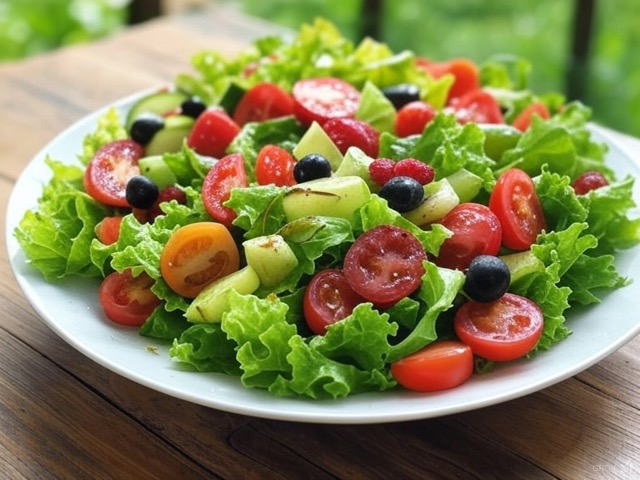
Tuna and Vegetable Salad When I want something quick, no-cook, and with minimal cleanup, I prepare this tuna and vegetable salad. I use a can of Rio Mare Mexican, which already contains tuna, corn, red beans, carrots, and bell peppers, and then I mix it with fresh Chinese lettuce. Balsamic vinegar gives it a slightly tangy flavor, while the pepper and spices from the can add a subtle kick. It comes together in no time and can be served simply or alongside baked potatoes. Quick Info Total time: not specified; salad assembles quickly, no cooking required Preparation time: a few minutes, depending on the amount of salad Cooking or baking time: not necessary for the salad Servings: the number of servings depends on the amount of Chinese lettuce added and the size of the can of tuna Difficulty: very easy Recipe type: tuna and vegetable salad, suitable for a quick meal Ingredients 1 can of Rio Mare Mexican tuna A few leaves of Chinese lettuce A splash of balsamic vinegar A drizzle of olive oil, if needed A pinch of dried coriander or dried parsley Salt, to taste Pepper, to taste Instructions 1. Wash the Chinese lettuce leaves and let them drain. Chop them into smaller pieces so they can be easily mixed with the tuna and canned vegetables. 2. Place the chopped lettuce in a large bowl. 3. Add the contents of the can of Rio Mare Mexican on top. The can contains tuna along with various vegetables, including carrots, bell peppers, red beans, and corn. 4. Gently mix the Chinese lettuce, tuna, and vegetables. Try to keep the corn and beans intact for a pleasant texture. 5. Season with salt and pepper to taste. It’s best to taste before adding too much salt, as the can may already contain enough. 6. Drizzle a bit of balsamic vinegar over the salad. Add a little olive oil only if you feel it’s necessary. If the mixture from the can is already moist enough, the oil can be omitted. 7. Finally, sprinkle a little dried coriander or dried parsley on top. Mix again gently, being careful not to crush the vegetables. The salad can be served immediately. If you choose to serve it with baked potatoes, it’s better to keep the salad cold and add the potatoes separately. Why I Make This Recipe Often I love it because the main part of the dish is already prepared in the can. I don’t have to cook the tuna or the vegetables, and the Chinese lettuce adds freshness and a bit of crunch. The balsamic vinegar balances the flavor, especially when the can is more seasoned. It’s a practical solution for a quick meal when I don’t want to prepare a complicated salad. The amount of Chinese lettuce can be adjusted based on how hearty I want the dish to be, without changing the other ingredients. Tips Wash the Chinese lettuce leaves well and let them drain before chopping. If there’s too much water left on the leaves, the dressing will dilute, and the salad won’t taste the same. Add balsamic vinegar gradually. It’s easier to add a little more than to fix a salad that’s too tangy. Taste before adding salt. The canned tuna with vegetables may already be seasoned, and the necessary amount varies from product to product. Olive oil is mentioned as optional. If the mixture in the can has enough liquid and the salad doesn’t seem dry, it’s not necessary to use it. Mix gently, especially after adding the red beans and corn. They can be crushed if the salad is mixed too vigorously. Substitutions Dried parsley can be used instead of dried coriander. Both options are suitable in the basic recipe, depending on your taste preference. If you don’t want coriander, you can stick with just parsley. There’s no need to use both. Olive oil can be omitted when the can already has enough liquid. However, it’s not recommended to replace balsamic vinegar with another ingredient if you want to maintain the recipe's flavor. Variations For a leafier salad, you can increase the amount of Chinese lettuce while keeping the same can of Rio Mare Mexican. The flavor will be fresher, and the composition less concentrated. If you prefer a stronger taste, you can adjust the amount of pepper and balsamic vinegar, but it’s advisable to do this gradually. The can is already flavored and slightly spicy, so not many spices are needed. For a simple version, you can use just Chinese lettuce, the canned tuna and vegetables, salt, pepper, and balsamic vinegar. The olive oil and dried herbs remain optional, depending on how you like your salad. Serving Ideas The tuna and vegetable salad can be eaten as is, immediately after preparation. It’s also great alongside baked potatoes, as recommended in the original recipe. If serving with potatoes, place the salad in a separate bowl or next to the potatoes to prevent the Chinese lettuce from wilting from their heat. It can also be prepared as a light meal for lunch or dinner. Since it requires no cooking, it’s especially useful when you already have the can on hand and want to use a few fresh lettuce leaves. Frequently Asked Questions Can the salad be made without olive oil? Yes. Olive oil is optional and is added only if the salad seems too dry. If the liquid from the tuna and vegetable can is sufficient, the dish can be served without oil. Is it necessary to drain the can before mixing? The recipe does not specify draining the can. The contents of the can are added to the Chinese lettuce, and the liquid or sauce from the can contributes to the final flavor and texture. If you find there’s too much liquid, you can add it gradually, not all at once. How much Chinese lettuce should be used? The source mentions a few leaves, without a specific amount. You can use fewer or more, depending on how hearty you want the salad to be and the size of the leaves. Can parsley be used instead of coriander? Yes. The recipe allows for the use of dried coriander or dried parsley. Parsley has a more familiar and subtle flavor, while coriander has a more distinct aroma. What is the best way to serve it? The salad can be served plain or alongside baked potatoes. The potatoes are prepared separately, and the salad is mixed and seasoned without cooking. Nutritional Values The values are estimates, as the weight of the Rio Mare Mexican can, the amount of Chinese lettuce, and the quantity of oil used are not specified. Additionally, the values vary depending on the exact product. For one serving, if this amount is divided into two portions and very little or no oil is used, the estimate may be: Calories: approximately 180–260 kcal Protein: approximately 12–18 g Carbohydrates: approximately 12–20 g Fats: approximately 6–12 g Fiber: approximately 3–6 g The tuna mainly contributes to the protein intake, while the red beans and corn add carbohydrates and fiber. Olive oil increases the caloric value and fat content, even when used in small amounts. Due to the lack of exact quantities, these values should not be considered precise nutritional calculations. Storage and Reheating The salad is best consumed immediately after preparation while the Chinese lettuce leaves are still fresh. If any remains, it can be stored in the refrigerator in a covered container, but the leaves may wilt due to the balsamic vinegar and the liquid from the can. Reheating the salad is not recommended. The tuna with vegetables and Chinese lettuce are served cold or at a suitable temperature for consumption. If you plan to keep it for later, it’s preferable not to add the dressing until just before serving; however, the basic recipe involves mixing all the ingredients before consumption.
Tags
Categories

Appetizers

Beverages

Celebrity chefs
Chef in the city

Children

Coffee
Conserve

Cook and smile
Culinary Games
Culinary School

Dessert

Diverse

Doughs and pastries
Drinks

Fish
Healthy Delights

International
Jakob Hausmann
Jam
Jamie Oliver
Meat
Miscellaneous
Over
Pasta/Pizza
Pickles
Plague
Salad

Sandwiches
Sauces
Savory
Season
Sezon
Slow cooking
Soups
Star Recipe

Syrup
Translated
Various
Vegan